
Tent Rentals / Luxury Tent Rentals
Luxury tent rentals that look finished from the inside
Luxury tent rentals are judged at nine at night, from a seat at the back table, once the sun is gone and the light is doing the work. That is the view we plan for: the structure overhead, the ceiling treatment, the floor underfoot and the furniture your guests are actually sitting in.
What you are actually buying
A room you build on your own ground
Luxury tent rentals answer a different question than a standard tent does. A standard tent asks how many people fit under the top. A high end install asks what the room looks like once it is full, lit and photographed, and then works backward to the structure that makes that possible.
Most of the difference is settled before anything leaves Holtsville. Which structure goes up. Whether the ceiling stays open or gets lined. Where the light hangs. What the floor does with a lawn that is never as level as it looks from the patio. Those four decisions are the ones guests feel, and they are the ones a cheap install skips.
This is the right call when your property is doing the work of a venue for a night. Everything a venue would have supplied, from the ceiling to the lighting to the floor, arrives on a truck and has to look like it was always there.
Most installs at this level are weddings, and our wedding rentals cover how the rest of the day fits around the tent. The others are anniversaries, milestone birthdays and private dinners that want the same room.
Installs we have built
What the finish work looks like
Real installs from our own fleet. Open any photo to move through the full set.
An upgraded install
What the finished room actually looks like
The difference between a standard install and an upgraded one is mostly invisible in a photograph and obvious the moment you walk in. Ceiling treatment, lighting, flooring and the way the edges are finished.
This is one of ours, filmed on the property. Family owned since 2007, more than 1,000 tents on our own racks, and our own crew from the survey through the strike.
Start at the top
The structure decides everything that comes after it
Three structures carry almost every high end install we do. They behave differently at night, they hang differently, and they put their poles in different places. Pick this first, because the ceiling, the light and the layout all follow from it.
Sailcloth
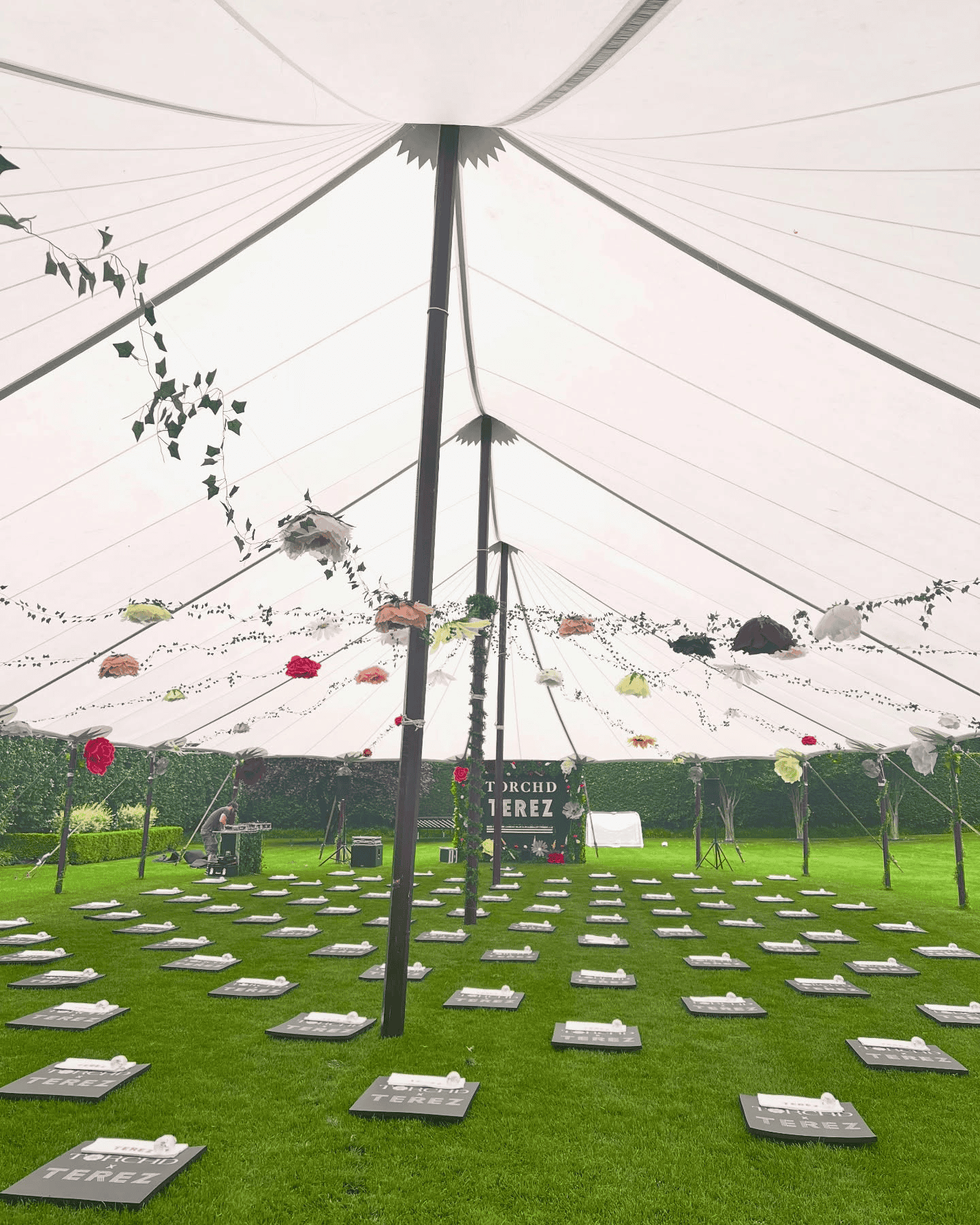
A translucent top on wooden poles. In daylight it softens the sun instead of blocking it, and after dark the fabric holds the light so the whole roof glows rather than going flat and white. The center poles are part of the look, so the layout works around them.
Sailcloth tent rentals
Clear top
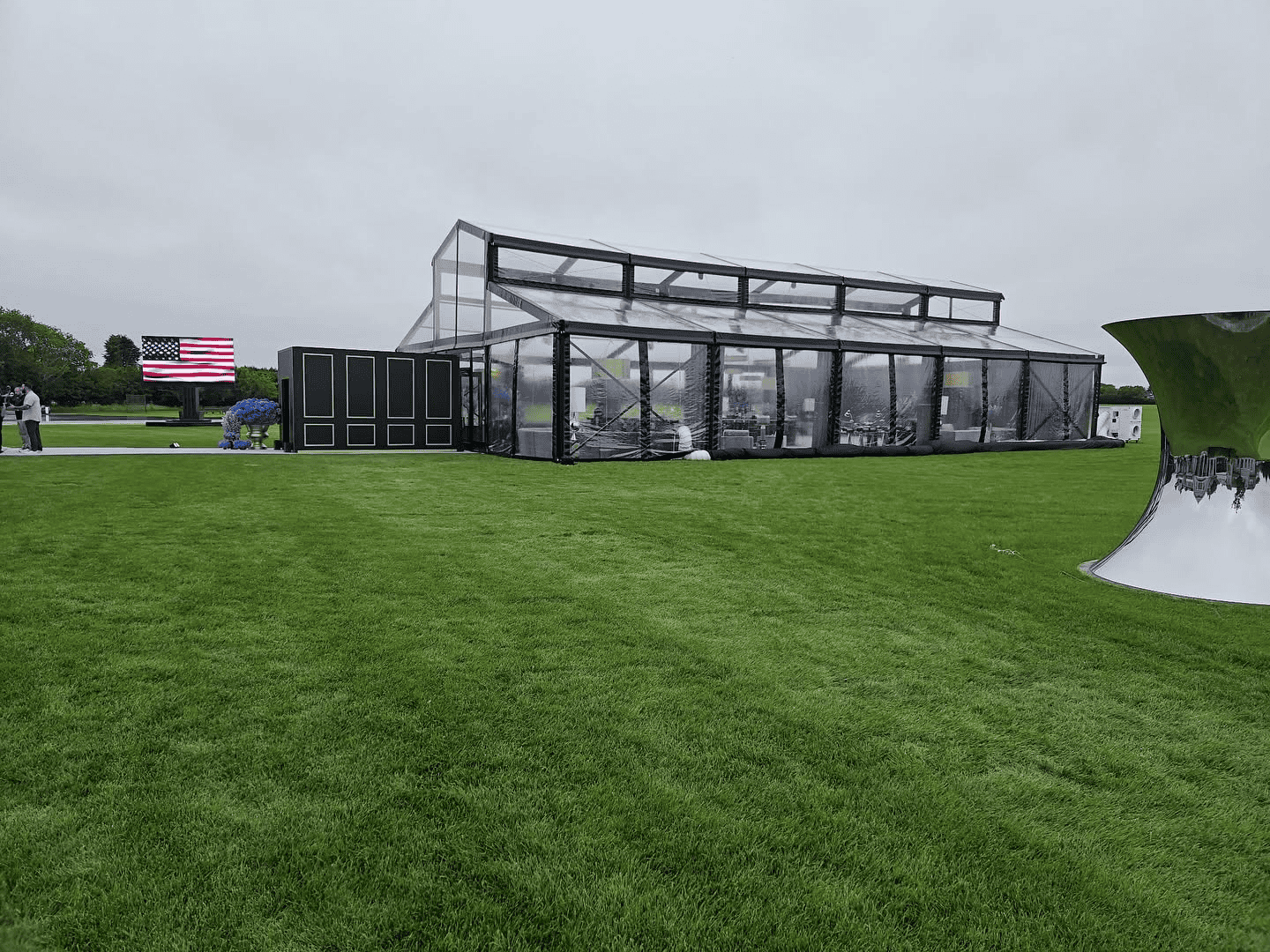
Transparent roof panels, so the sky is the ceiling and anything you hang reads against it. It is the strongest evening structure we install and the one that needs the most planning for a daytime event, because a clear roof in July builds heat fast without cooling under it.
Clear top tent rentals
Clearspan structure
Straight walls, an engineered frame and no interior poles at all, so every square foot of the floor is usable and a long table can run the full length of the tent. It ballasts onto a driveway or a terrace where staking is not an option.
Structure tent rentals
The finish items
What goes inside, and what each piece is for
Six systems turn a structure into a room. You can take one of them or all six, and each one changes a different part of what a guest sees.
Liners and ceiling fabric
A liner hides the frame, the seams and the cable runs behind pleated fabric, and it softens sound in a tent that would otherwise ring. It does its best work under a white vinyl frame tent. Under sailcloth it is usually the wrong call, because it covers the top you paid for.
Drape on the legs and walls
Fabric down the tent legs and across the back wall gives the room edges, and hides the things that have to be somewhere: the catering entrance, the power runs, the back of a bar, the pool equipment nobody wants in a photograph.
Lighting
The single biggest change between a standard install and a high end one. Layered light on dimmers, warm over the tables, color washed up the legs and enough spill outside the tent that the walk in from the driveway is lit too.
Event lighting rentals
Flooring
A subfloor levels a sloped lawn and keeps heels, table legs and a bar cart off wet grass. Hosts think about it last and notice it most, because it is what the room feels like underfoot for five hours.
Event flooring rentals
Climate control
Tented air is not outdoor air. A clear top in daylight needs cooling, and an October night on open water needs heat that runs quietly enough to talk over. Both get sized to the volume of the tent rather than guessed at.
Heating and climate control
Furniture
Lounge groupings at the edges give guests somewhere to sit that is not their assigned chair, which keeps people in the tent after dinner instead of drifting back to the house. Bar seating does the same job during the first hour.
Lounge furniture rentals
Compare the two
Standard install, upgraded install, line by line
Same tent, same lawn, same guest count. Switch between the two and watch what actually changes. These are the items that can be added to any install, in any combination, not fixed packages you have to buy whole.
A standard install is a sound, well built tent carrying the things an event has to have. An upgraded install is the same crew adding finish work on top of it: a different structure, a treated ceiling, real lighting, a floor, air that behaves and seating that holds people in the room.
Take one line or take all six. We quote what you pick, on the tent you need, for the ground it is going on.
Nothing here is a product name or a tier. It is the same inventory in our warehouse, ordered by how far you want the finish to go, and every line on it is a separate decision you make with us.
How the job runs
Surveyed for a property, not a parking lot
An install like this is drawn to one piece of ground. The order below is the order our crew works in, and the first step is the one that decides whether the rest of it is easy.
We walk the property
Usable area, slope across the footprint, tree canopy, irrigation, septic, overhead wires, the surface the tent lands on, and how a loaded truck gets in and turns around. We measure it rather than working from a satellite image.
We draw the layout
The footprint gets placed for the view, the sun and the walk in from the drive, then the dance floor, the bar, the buffet and the seating go inside it. Where the caterer works and where the power runs are part of that drawing, not an install day afterthought.
We install in finish order
Structure first, then the floor, then the ceiling treatment and the lighting, then furniture last so nothing gets walked over. Staked or ballasted to the surface it is standing on, which on hardscape and terraces means weight rather than stakes.
Event day and breakdown
You have the number of the company that owns the tent, so if the wind picks up or something has to move you are not calling a subcontractor. We come back on the agreed day, strike it and leave the ground the way we found it.
The finish standard, and what Long Island does to it
Finish work is where a high end install is won or lost, and most of it is labor. Liner seams line up with the frame. Drape hangs plumb and breaks at the floor instead of pooling. Cable runs go behind fabric, not across a walkway. Floor edges get trimmed so nobody catches a heel where the floor meets the grass. It is slower than a standard build, and the schedule has to allow for it.
The ground here has opinions too. Waterfront lawns on the East End take wind straight off open water, so anchoring gets heavier and sidewall planning matters more. North Shore estate lawns are often long, sloped and hedged, which makes access and leveling the real constraints rather than square footage. Spring ground on the North Fork stays soft well past the first warm week, and a roof or hardscaped terrace in the city is a ballast job with a load-in plan. Most towns also want paperwork on a tent before it goes up, and the requirement changes from one town to the next, so it belongs on the first call.
What moves the number
The factors that decide what an install costs
We do not publish numbers, because the same tent on two properties is two different jobs. What we can tell you is exactly which factors move a quote, so you know what you are trading when you change one.
| Factor | What moves it up or down |
|---|---|
| Structure and span | A sailcloth, clear top or clearspan structure takes more parts and more crew hours than a standard frame tent over the same footprint, and a wider clear span takes more of both. |
| Ceiling treatment | Liner and drape are priced by how much fabric the tent takes and how many hours it takes to hang it straight. A larger tent multiplies both at once. |
| Flooring | Setting on grass costs least, a subfloor over a slope costs most, because leveling is carpentry before it is flooring. The steeper the lawn, the more goes underneath. |
| Lighting and power | Fixture count, how much of it runs on dimmers, and whether the property carries the load or the site needs its own power for lighting, climate equipment and the caterer together. |
| Climate control | Sized to the volume of the tent and the season rather than the guest count. A clear top in daylight and an open sided tent in October are two different loads. |
| Site and access | Distance from where the truck parks to where the tent goes, gates, stairs, soft ground, and whether we stake into a lawn or ballast onto a driveway or terrace. |
| Date and duration | Peak Saturdays through the season are the busiest, and a tent standing over a long weekend is a different job than one that goes up and comes down inside three days. |
In our customers' words
Hosts who wanted the room to look right
"TGIF handled my event in the Hamptons, and I needed everything to look elegant without becoming too expensive. They delivered exactly what I was looking for."
"I was looking for an elegant setup for my event, and TGIF knocked it out of the park. Their sailcloth tent looked incredible, and the final result exceeded my expectations."
"I had a corporate event with TGIF, and I still can't get over how easy they made everything. Every detail needed to be perfect, and somehow the result was even better than perfect."
Straight answers
What hosts ask us about a high end install
Talk to us
Tell us about the property and the date
Bring the address, the date and a rough guest count and we will tell you what the ground will take, which structure suits the night you have in mind and what the finish work involves. If a tent is the wrong answer for your property, you hear that on the first call.